7 Common Mistakes That Lower Your CIBIL Score (and How to Avoid Them)
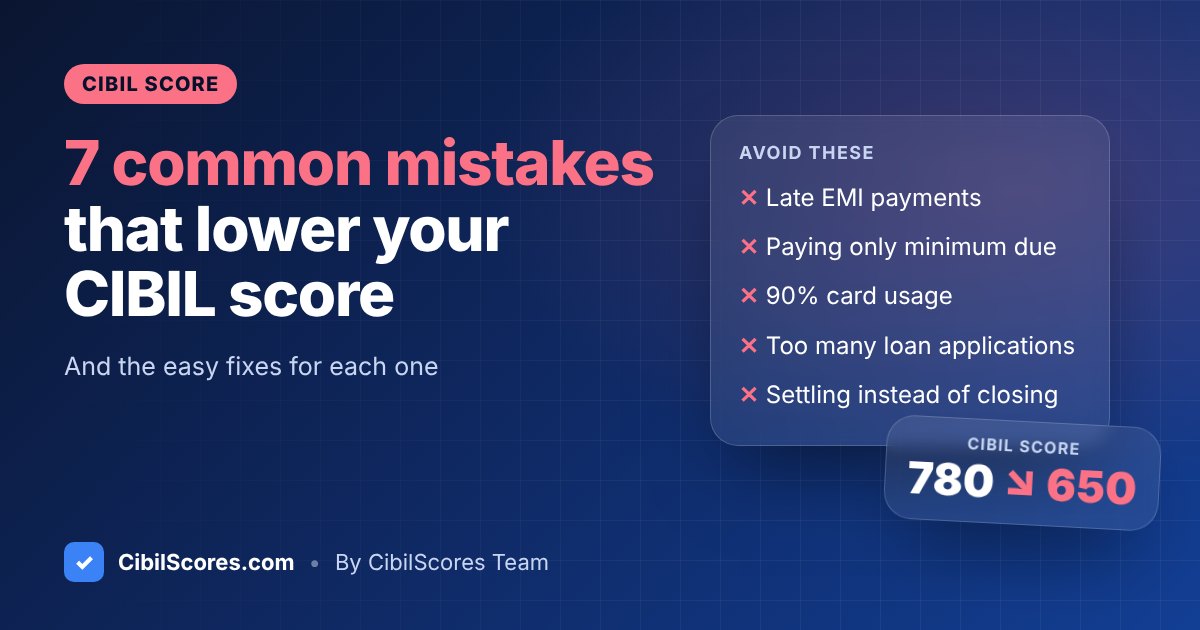
Your CIBIL score is built from your repayment behaviour over years, but a few common habits can pull it down surprisingly fast. The good news: every one of them is easy to fix.
1. Missing an EMI or card payment, even by a few days
Payment history matters more than anything else. A payment that is even a few days late can be reported as overdue (DPD) in your credit report.
Fix: Set up auto-debit for every EMI and at least the minimum due on each credit card.
2. Paying only the minimum due
Paying the minimum keeps your account "current", but the unpaid balance attracts high interest and keeps your credit usage high.
Fix: Pay the full statement amount whenever you can.
3. Using most of your credit card limit
Using a large share of your limit every month signals that you depend on credit.
Fix: Try to keep usage below 30% of your total limit. On a ₹1,00,000 limit, that's under ₹30,000.
4. Applying for many loans or cards at once
Every application leads to a hard enquiry on your report. Many enquiries in a short time can make you look credit-hungry.
Fix: Compare offers first, then apply only where you are likely to be approved.
5. Settling a loan instead of closing it
A "settled" status means you paid less than you owed. Lenders see this as a negative even years later.
Fix: If possible, repay in full so the account is marked "Closed".
6. Closing your oldest credit card
Closing an old card can shorten your credit history and reduce your available credit.
Fix: Keep old, no-annual-fee cards open and use them lightly.
7. Never checking your credit report
Errors happen: a loan you closed may still show as active, or someone else's account may appear on your report.
Fix: Check your free report from all four credit bureaus every year and dispute mistakes on the bureau's website.
This article is general information, not financial advice. Each lender sets its own approval criteria.